How AI Detects Employee Burnout Before It's Too Late
Burnout doesn't announce itself. But the warning signs hide in work patterns - patterns AI can detect weeks before breakdown. Here's how proactive monitoring protects your team.
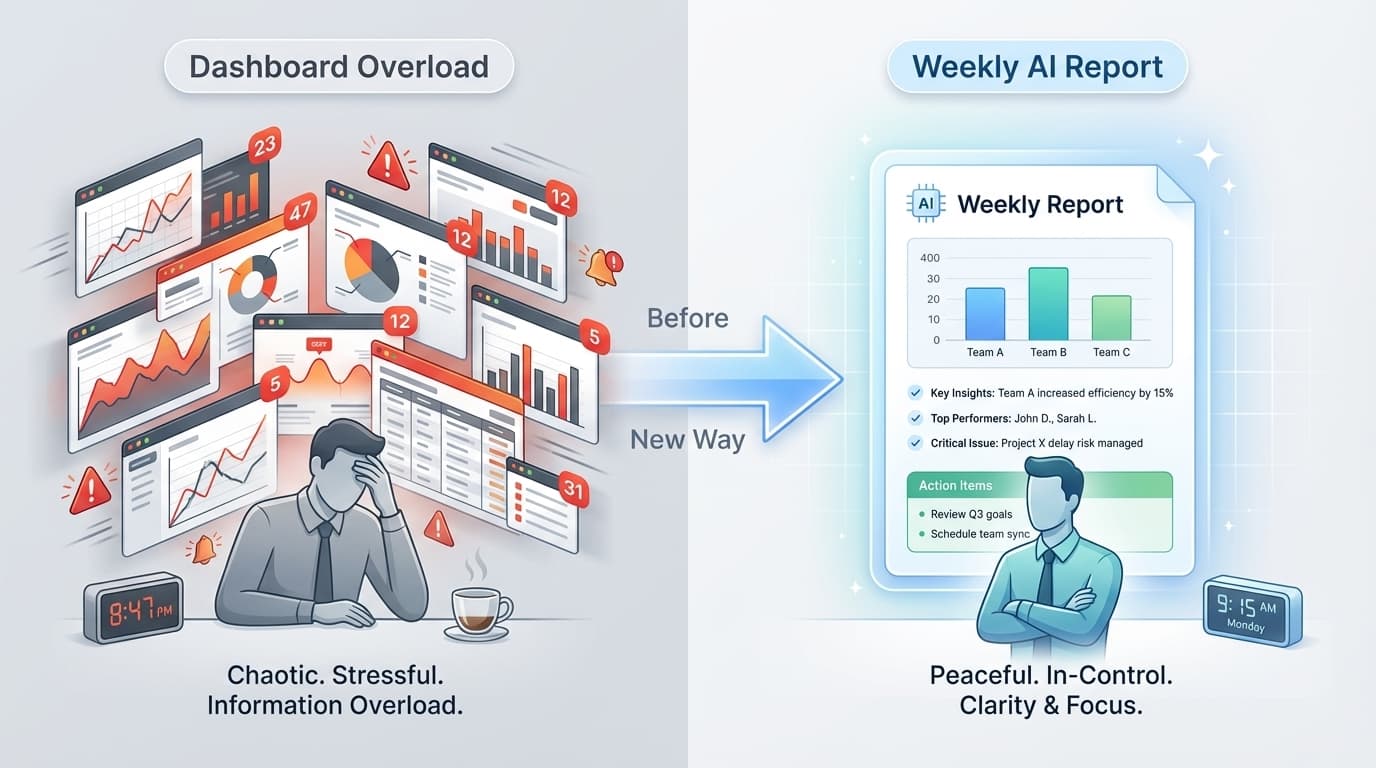
By the time an employee says "I'm burned out," they've been burning out for months.
The resignation letter lands. The medical leave request comes. The previously stellar performer has silently deteriorated into exhaustion. Every manager asks the same question: "Why didn't I see this coming?"
The answer: the warning signs were there. Hidden in work patterns that human observation misses but AI catches.
The Hidden Cost of Burnout
The Numbers
- $125-190 billion annual healthcare spending attributed to workplace burnout
- 23% of employees report feeling burned out "very often" or "always"
- 63% of burned-out employees are more likely to take a sick day
- 2.6x more likely to be actively seeking a new job
The Real Cost
Beyond statistics, burnout destroys:
Individual employees:
- Physical and mental health deterioration
- Career setbacks from performance decline
- Relationship strain from work overflow
- Long-term professional confidence damage
Organizations:
- Lost institutional knowledge when people leave
- Recruitment and training costs (1.5-2x annual salary)
- Team morale impact watching colleagues burn out
- Productivity loss during decline and recovery
Why Traditional Detection Fails
Managers typically notice burnout through:
- Direct complaints (too late)
- Visible performance drops (already damaged)
- Sick day spikes (health impact begun)
- Resignation notice (point of no return)
By any of these signals, intervention is reactive recovery, not proactive prevention.
The Patterns AI Sees
1. The Overtime Creep
What it looks like to humans:
"Sarah's really dedicated - always online late, responds to weekend emails."
What AI detects:
| Week | Hours Logged | After-Hours Activity | Pattern |
|---|---|---|---|
| Week 1 | 42 | 3 late nights | Normal |
| Week 2 | 46 | 4 late nights | Slight increase |
| Week 3 | 51 | 5 late nights | Concerning trend |
| Week 4 | 55 | 6 late nights + weekend | 🔴 Burnout trajectory |
The AI flags at Week 3: "Sarah's hours have increased 25% over three weeks with consistent after-hours activity. Pattern indicates potential overwork. Recommend workload review."
A human might not notice until Week 6 or later - after health impacts begin.
2. The Focus Decline
What it looks like to humans:
"Marcus seems a bit distracted lately, but he's still getting work done."
What AI detects:
Burnout often manifests as declining focus before declining output:
- Week 1: Focus blocks averaging 90 minutes, 12 context switches/hour
- Week 2: Focus blocks averaging 75 minutes, 18 context switches/hour
- Week 3: Focus blocks averaging 45 minutes, 28 context switches/hour
- Week 4: Focus blocks averaging 25 minutes, 45 context switches/hour
Output might stay constant (Marcus is working harder to compensate), but the effort cost is unsustainable.
AI flag: "Marcus's focus metrics have declined 70% over four weeks while maintaining output. This compensation pattern often precedes burnout. Check-in recommended."
3. The Schedule Erosion
What it looks like to humans:
"Priya's been starting a bit late recently, but she's always been flexible with hours."
What AI detects:
Burned-out employees often show schedule irregularity before obvious problems:
- First activity time drifting later
- More mid-day gaps
- Irregular logout times
- Decreased schedule adherence score
These patterns indicate someone struggling to maintain normal work routines - often an early exhaustion signal.
AI flag: "Priya's schedule adherence dropped from 94% to 67% over three weeks. First login time averaging 90 minutes later. Pattern suggests potential wellness issue. Supportive check-in recommended."
4. The Productivity Plateau
What it looks like to humans:
"Team output is good, everyone's hitting targets."
What AI detects:
Sometimes burnout hides behind maintained performance - but at increasing cost:
| Metric | Healthy State | Pre-Burnout State |
|---|---|---|
| Output | Meets targets | Meets targets |
| Hours required | 40 | 55 |
| Effort Score | 85 | 85 |
| Focus efficiency | High | Declining |
| After-hours work | Minimal | Significant |
The employee is running faster to stay in place. Unsustainable.
AI flag: "David maintains consistent output but requires 35% more hours than baseline. Efficiency decline with maintained performance indicates overcompensation. Workload review recommended."
ScreenJournal's Burnout Detection
What Gets Monitored
ScreenJournal's AI watches for burnout indicators across multiple dimensions:
Time Patterns:
- Weekly hour trends
- After-hours activity frequency
- Weekend work patterns
- PTO usage (or lack thereof)
Focus Metrics:
- Average focus block duration
- Context switch frequency
- Deep work vs. shallow work ratio
- Application usage patterns
Schedule Health:
- Start/end time consistency
- Mid-day activity gaps
- Break patterns
- Adherence to expected hours
Effort Efficiency:
- Output relative to hours invested
- Productivity per focus hour
- Trend direction over time
How Alerts Work
Burnout signals appear in your weekly AI report with context:
🔴 BURNOUT RISK: Sarah (Marketing Manager)
Pattern detected: Escalating overtime with declining efficiency
Evidence:
- Hours: 42 → 46 → 52 → 58 over four weeks
- Focus blocks: decreased 40%
- After-hours activity: 6 days this week
- No PTO in 4+ months
Similar historical cases: 78% resulted in medical leave or resignation within 8 weeks without intervention
Recommended action: Schedule supportive 1:1 within 48 hours. Topics: workload assessment, project prioritization, mandatory time off consideration.
Privacy Considerations
Burnout detection raises legitimate privacy concerns. ScreenJournal's approach:
What AI analyzes:
- Work pattern timing
- Activity levels
- Application categories
- Schedule adherence
What AI doesn't capture:
- Content of work
- Personal communications
- Reasons for patterns
- Health information
The AI identifies that someone's work patterns suggest burnout. It doesn't know why - that requires human conversation.
Responding to Burnout Signals
The Supportive Check-In
When AI flags a burnout risk, the goal isn't confrontation - it's support.
DON'T:
"The monitoring system says you're working too much. What's going on?"
DO:
"I noticed you've been putting in a lot of extra hours lately. I want to make sure you're doing okay and see if there's anything I can do to help with workload."
Workload Assessment
AI data enables concrete workload conversations:
- "You've averaged 55 hours the past month - what's driving that?"
- "Your focus metrics suggest constant interruptions - is that a process issue we can fix?"
- "I'm seeing a lot of after-hours activity - are deadlines unrealistic?"
Structural Solutions
Burnout often isn't individual failure - it's systemic overload. AI patterns can reveal:
- Resource gaps: One person covering too much
- Process issues: Inefficient workflows requiring overtime to complete
- Priority confusion: Everything "urgent" means constant firefighting
- Meeting overload: No time for deep work
Mandatory Recovery
Sometimes the intervention is simple: require time off.
"Based on the patterns I'm seeing, I want you to take Friday off this week and Monday next week. Not optional. We'll cover your responsibilities. Use the time to actually disconnect."
Burnout doesn't self-correct through willpower. It requires genuine recovery.
Prevention vs. Detection
Early Warning Thresholds
Configure ScreenJournal to flag concerns before they become crises:
| Pattern | Yellow Flag | Red Flag |
|---|---|---|
| Weekly hours | 10% above baseline | 25% above baseline |
| After-hours activity | 3 nights/week | 5+ nights/week |
| Focus decline | 20% reduction | 40% reduction |
| Schedule adherence | Below 80% | Below 65% |
| PTO gap | 60 days | 90+ days |
Team-Level Patterns
Individual burnout often signals team problems:
- Multiple team members trending toward overwork
- Specific projects consistently requiring overtime
- Certain periods (month-end, releases) creating unhealthy spikes
AI can identify these patterns across your organization, enabling systemic fixes.
The ROI of Burnout Prevention
Direct Savings
Avoided turnover:
- Average cost to replace: $50,000-$75,000
- Burnout-related turnover prevented: Significant ROI per save
Reduced sick days:
- Burned-out employees: 23% more sick time
- Early intervention prevents escalation
Indirect Benefits
Team morale:
- Watching colleagues burn out is demoralizing
- Proactive management builds trust
Employer brand:
- "They actually care about wellbeing"
- Attracts candidates who value sustainability
Sustained performance:
- Preventing burnout maintains productivity
- Recovery periods from burnout are expensive
Building a Burnout-Aware Culture
AI detection is a tool, not a solution. Sustainable workplaces require:
Normalized Boundaries
- Leaders who actually disconnect
- Policies that discourage after-hours work
- PTO that's genuinely encouraged
Manageable Workloads
- Realistic project timelines
- Staffing that doesn't require heroes
- Permission to say "no" or "not yet"
Open Communication
- Regular check-ins about capacity
- Safe spaces to discuss struggles
- Action on feedback received
AI helps you see what's happening. Culture determines what you do about it.
Stop guessing. Start knowing.
Let AI turn screen data into clear insights. Start your 2 months free trial
Related Posts
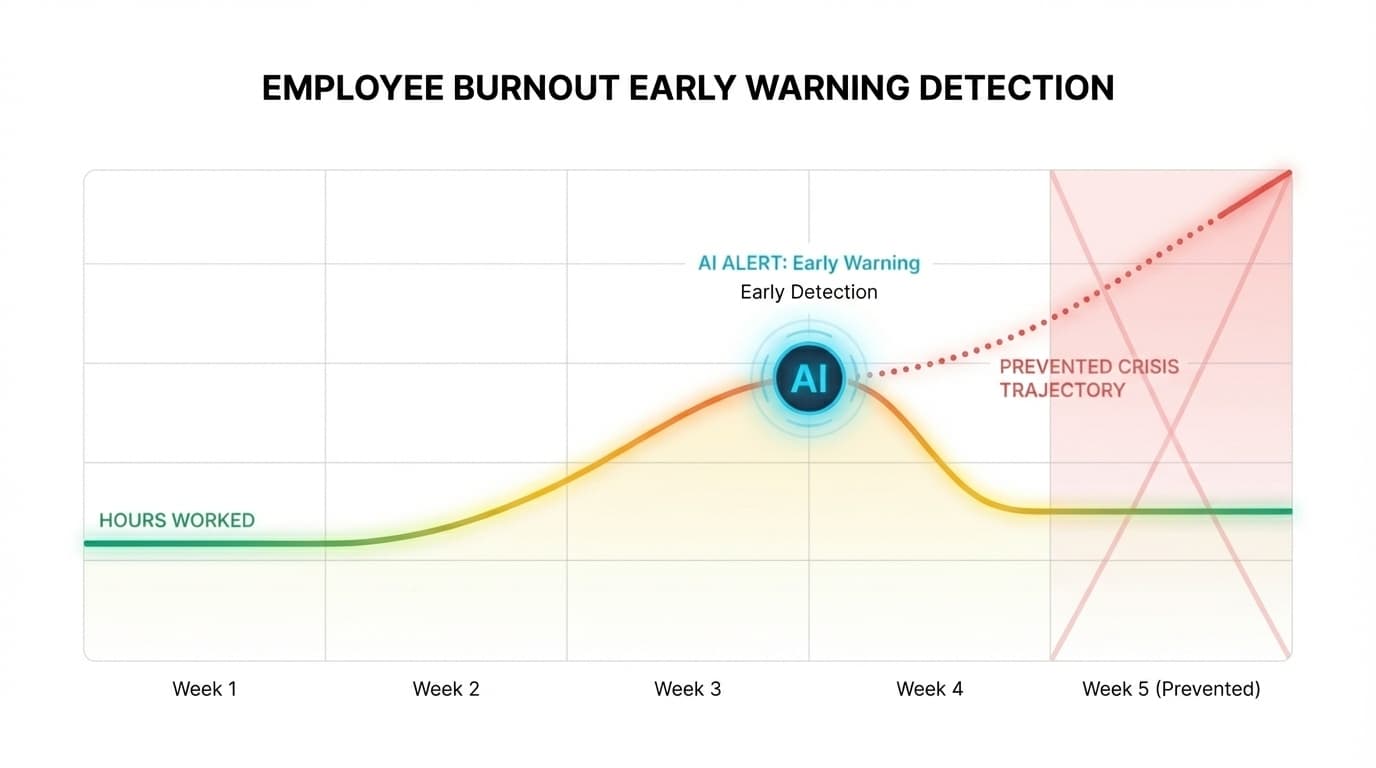
Why Weekly AI Reports Beat Real-Time Dashboards
Dashboards promised visibility. They delivered data overload. Here's why switching to weekly AI-generated reports transforms how managers actually manage.
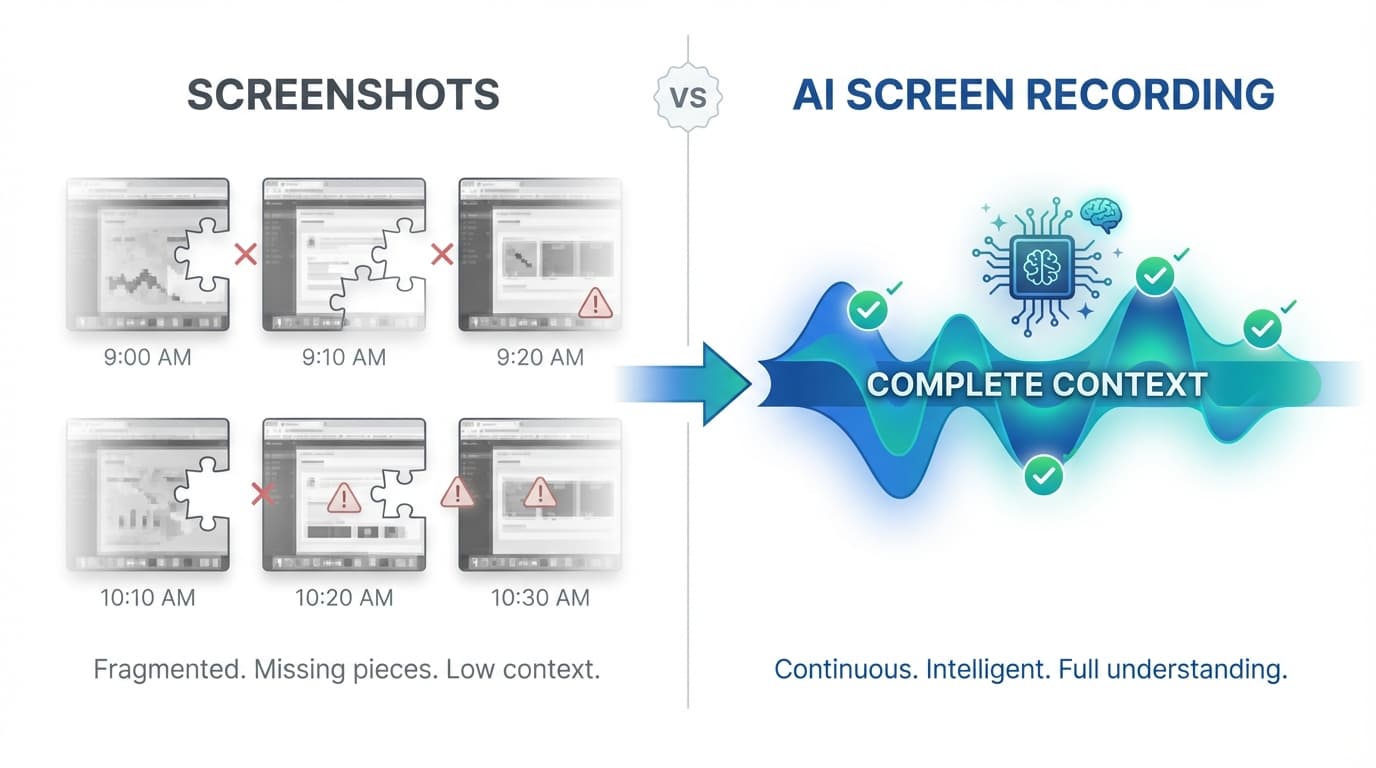
Why AI Screen Recording Beats Screenshot Monitoring
Random screenshots were the best we had. AI-analyzed screen recording is what we actually needed. Here's why the shift matters for accurate productivity measurement.
How AI Voice Analysis Transforms Call Center QA
Manual QA reviews 2-5% of calls. AI analyzes 100%. Learn how ScreenJournal's voice analysis replaces random sampling with comprehensive quality intelligence for call center teams.